Growing knowledge to safeguard heritage kumara of Aotearoa
Ngāpuhi researcher and AUT PhD candidate Rob Small is working to protect the pre-colonial kūmara varieties of Aotearoa. A new book and a network of community gardens are helping to share knowledge and keep these taonga growing for future generations.
Kūmara arrived in Aotearoa on Waka Hourua (double-hulled ocean-going vessels) more than 800 years ago. These sweet root vegetables fed generations of tūpuna Māori and remain a staple on many tables today. It is thought that there were once up to 60 varieties of kūmara grown across the country but many of these have been lost with modern supermarkets now only selling three kinds.
Rob Small wants to change that by researching, cultivating and celebrating the rich diversity of kūmara. After a long career in parks management, including nine years as director of Auckland's regional parks, he completed a Master of Landscape Architecture and went on to design and curate the gardens at Te Pourewa for Ngāti Whātua Ōrākei. Rob is not only working on his PhD, he is also an AUT research fellow, Te Aronui research scholar and a member of the leadership group for Te Whare Tūroa AUT Regenerative Environments Research Network. Kūmara has become the heart of his work.
The Regenerative Environments Research Network (RegEN) is working to accelerate the transition to a regenerated living world, where place-based knowledge systems and practices enable communities to thrive in kinship with te taiao. Rob's kūmara mahi helps put that vision into practice. It brings together mātauranga Māori, community gardening and research to restore heritage food crops, the knowledge that surrounds them and the communities that grow them.
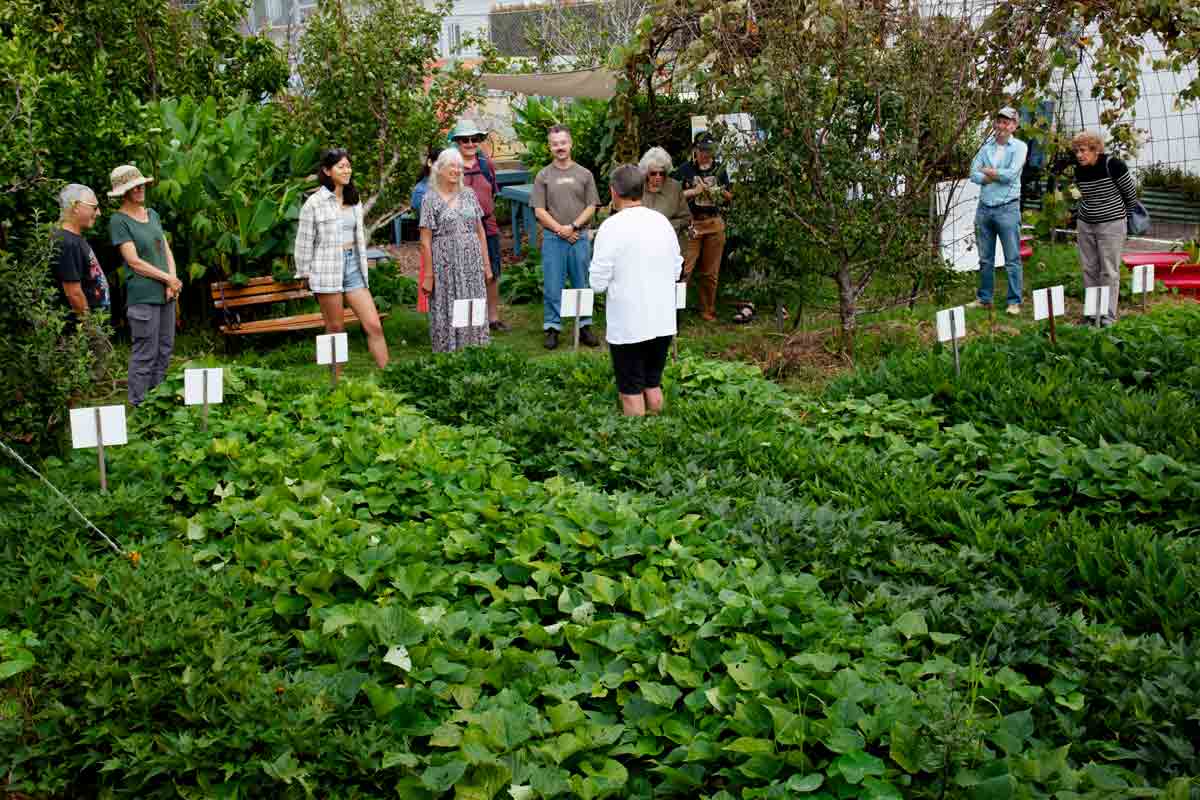 Rob Small sharing kūmara knowledge with community gardeners. Image - Growing point
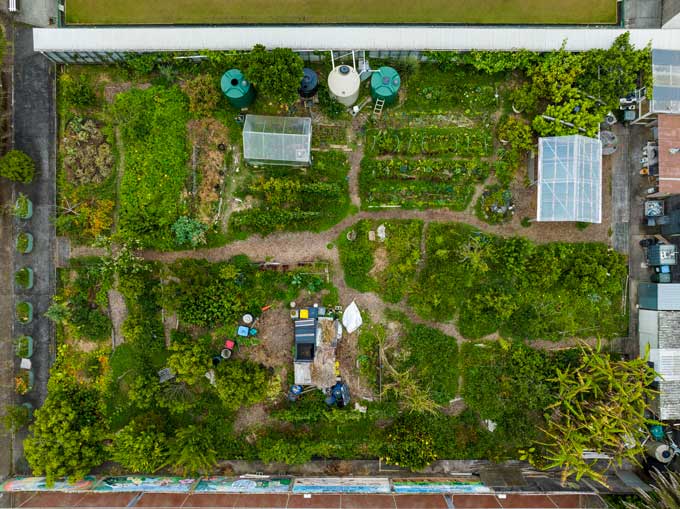 Growing Point - Dignan St Community Garden is home to many varieties of kūmara. Image - Petra Leary photography
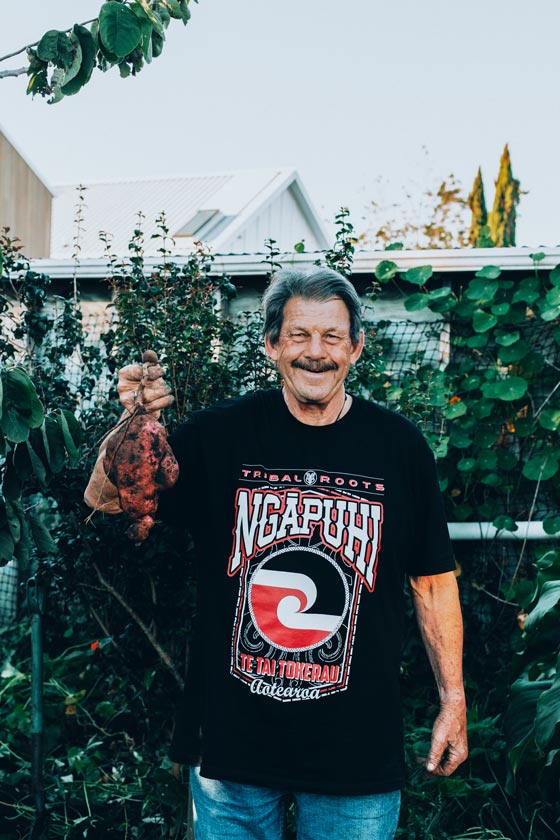 Rob Small with a harvesting kūmara. Image - Growing Point.
A team effort
As part of his PhD research, Rob has written a pukapuka (book) called Te Taonga o Ngā Kūmara that was released in July 2026. The A5, 100-page book was produced with Growing Point, the Dignan Street Community Garden in Point Chevalier, Tāmaki Makaurau. It features the 16 heritage varieties from the Dignan Street collection, with their whakapapa, mātauranga, growing guidance and tasting notes. The book has been warmly received, with the first print run of 200 copies selling out quickly.
Dignan Street volunteers were involved at every stage of the hands-on research for this project. They've been immersed in traditional kūmara gardening, from growing tupu (shoots) in tāpapa (nursery beds) through to planting and preserving the harvest.
"The way our volunteers have embraced the mahi has given the project great momentum," Rob says. "It has been a really collaborative project."
New curiosity and knowledge
Rob's kūmara research has spurred plenty of public curiosity and revealed new sources of knowledge. The book grew out of a kūmara curation project, which collects heritage varieties and grows them in traditional ways. With funding from Foundation North, curation gardens are currently cared for at Dignan Street and at Te Pourewa.
Both gardens sit beside public paths, and passers-by often stop to ask about the mahi. "There is a lot of interest in this kaupapa," Rob says. Trials are now extending to more gardens across Tāmaki.
Rob explains that the book has also become a vehicle for creating awareness about his research. "It has connected me with people who hold knowledge and kūmara varieties that we didn't have access to. It has also awakened a lot of people to the knowledge that kūmara is not only a staple of Aotearoa today but was also an important food for our tūpuna (ancestors)."
Keeping the varieties alive
Rob's vision traces back to the 1990s, when the late Del Wihongi travelled to Japan to retrieve kūmara varieties that had been sent there from Aotearoa. For him, the lesson was clear. Traditional kūmara varieties need to be secured and widely shared in Aotearoa.
He sees māra kai and community gardens as the natural home for that work, since these are the places where most heritage vegetables are grown. "It's a regenerative kaupapa," he says. "We want to treasure heritage varieties and increase the nutrition and range of the food we have access to."
Each variety carries its own history, flavour and ways to enjoy it. One of Rob's favourites is taputini, a vigorous pre-colonial kūmara that thrusts its tubers out of the soil as it grows. He also points to kao, a traditional preserved kūmara cooked in a hāngī for 12 hours or more, then dried into a crumbly, prized treat. His own favourite way to eat kūmara is simply air-fried.
Kūmara is easy to grow and highly nutritious, which Rob says makes it valuable for food security as well as heritage. He also warns explains growing a wide range of heritage kūmara builds resilience back into the food system. At Te Pourewa, the gardens are grown organically and guided by the maramataka (Māori lunar calendar), caring for the health of the soil alongside the people who eat from it.
Recording mātauranga for the future
The next stage of Rob's research focuses on mātauranga Māori relating to kūmara. He describes mātauranga as knowledge that changes over time while being bound to tikanga and ways of living. Kūmara gardens were once so important they were protected by tapu while the crop was growing.
"Mātauranga is the only record of observations of New Zealand's environment for over 1000 years," he says. "It has unique potential to inform the future of kūmara and food security in Aotearoa, so I am looking to make sure our mātauranga is recorded."
Rob is following a kaupapa Māori research approach, by Māori, for Māori and with Māori, and is focusing on his own Ngāpuhi roots in the Waima Valley, with Te Mahurehure, as well as Tūhoe, where he has strong connections.
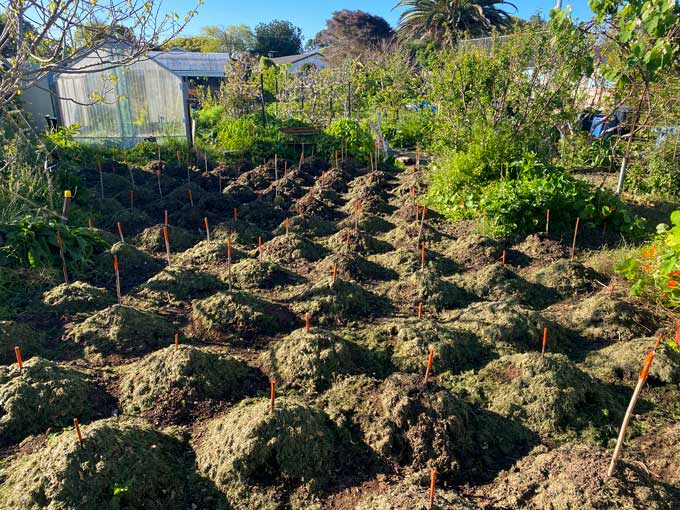 Kūmara beds at Dignan St Community Garden. Image - Growing Point.
A demonstration garden at North Campus
A kūmara demonstration garden at AUT's North Campus is now being discussed, and Rob is working to make the idea a reality. He would like it to include interpretive signage so visitors can learn about the varieties and their stories. The idea aligns closely with RegEN's mission to catalyse regenerative change by connecting communities, place-based knowledge systems and practices.
Rob sees the proposed garden as a showcase for AUT's applied, cross-university approach, bringing together culture and heritage, food science, horticulture and the broader sciences. It also has to potential to provide resources for the food science faculty to study nutritional values of the different varieties and how they compare to other vegetables like potatoes.
Te Taonga o Ngā Kūmara is presented by Growing Point. The first print run has sold out, and expressions of interest for a second print run and digital copies can be registered on the Growing Point website.
To find out more about RegEN's work, explore our projects or find out how to get involved.