Putting invertebrates under the spotlight
Creating an invertebrate baseline at the AUT Living Laboratories
Many years ago, ecologists believed that if you build it, they will come. Unfortunately, we have discovered this often isn’t true: just because you restore a habitat, it doesn’t mean the appropriate native species will return.
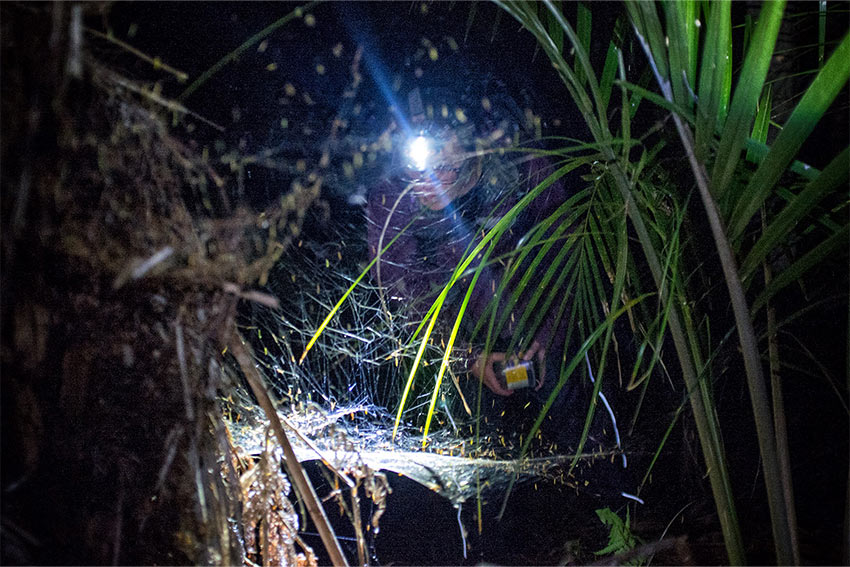
Because of this, we still need to monitor restoration sites to find out which species are returning and in what numbers. This data forms a vital foundation for further research and is exactly what Leilani wants to gather at the Living Laboratories sites.
She says, “There hasn’t been any kind of inventory of which terrestrial arthropods are at the Living Lab sites. It’s really hard to propose projects without knowing what’s already there, because invertebrates are so diverse and have such a range of different functions within the environment.”
The team will be going through sources such as historic studies (published and student projects), data from past Bioblitzes, iNaturalist, and natural history collections to get an idea of which species have been found at the Living Lab sites. From there, future research can fill knowledge gaps or monitor populations that have already been well-studied.
Pūngāwerewere and us
Spiders aren’t usually welcome guests where people are concerned, but why is that in Aotearoa, where so few species are dangerous?
Leilani and her team are in the process of tracing the origins of language we use when we talk about spiders. Where did our current contempt come from? Is it from ideas brought over from other countries, where spiders are much more of a threat?
She says, “I'd like to draw on the existing written corpus of information, which includes ethnography, anthologies, and the way that spiders are spoken about in newspapers. That includes niupepa Māori, which were Māori language newspapers.”
Leilani is interested in how Māori relationships with our native fauna may have been changed through colonisation. If we can identify how, and to what extent, this is happening, then we might be able to repair some of the damage that has been done and avoid the same mistakes in the future.
“Terrestrial invertebrates are typically viewed in a poor light compared to charismatic megafauna,” she says, “and this has implications for their conservation. For example, in the New Zealand government’s 2020/21 budget: spiders received $9,306 in dedicated funding while Māui and Hector’s dolphins received $547,918.”
About the researcher
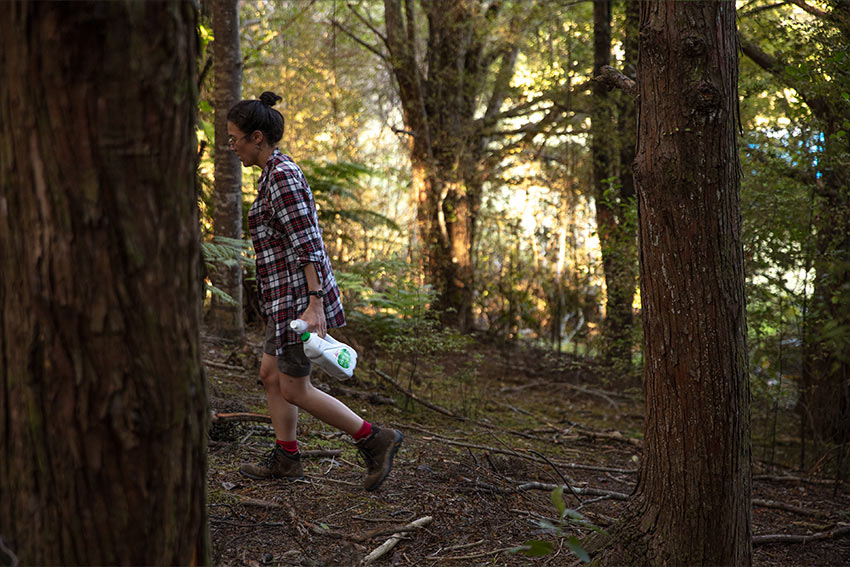
Dr Leilani Walker (Te Whakatōhea) is our resident entomologist with special interests in biodiversity, animal behaviour and relationships between New Zealanders and our native environment.
She is leading a group of projects aiming to better understand and enhance our connection with invertebrates in Aotearoa, with a special focus on the native species of the upper North Island.