Eat New Zealand celebrates its tenth birthday at AUT
Auckland University of Technology recently hosted the tenth birthday of Eat New Zealand – a not-for-profit whose goals are to encourage and enable collaboration between all parts of our food system that are working towards regeneration.
Te Whare Tūroa is excited to join this kaupapa via the AUT Centre for Critical Food Studies, so we’re looking back at how Eat New Zealand got to where they are today, and where they might be going in the future.
Putting down roots
2015: Aotearoa was blissfully unfamiliar with face masks, while we car-danced to Uptown Funk and debated getting a new flag. It was also the year Giulio Sturla, one of our best chefs, decided to create the not-for-profit organisation ‘ConversatioNZ’.
Giulio’s aim was to promote Aotearoa as a food destination on the international stage, as well as developing conversations within the food scene at home. Since then, the
organisation has gone from strength to strength and is now the leader in telling the “Aotearoa Food Story”.
A name change to ‘Eat New Zealand’ reflected a goal transition to not just telling stories, but connecting all New Zealanders to their food – allowing it to sustain them culturally, socially and nutritionally.
Food systems expert Professor Tracy Berno (AUT) was there from the start. She says at the fore, Eat New Zealand wants to see a better, more regenerative food system for all New Zealanders.
“New Zealand produces enough food to feed 40 million people, but exports up to 90% of it. The way in which we produce that food can have serious consequences for our country,” she says.
Eat New Zealand is also interested in the relationship between food production and tourism, both of which are heavily dependent on our landscape.
Tracy says, “We sell our landscape in terms of food production, and as an export product through tourism. That comprises the vast majority of our economy. If we screw up our landscapes through the way that we manage our agricultural production, we're going to screw up our second biggest industry, which is tourism.”
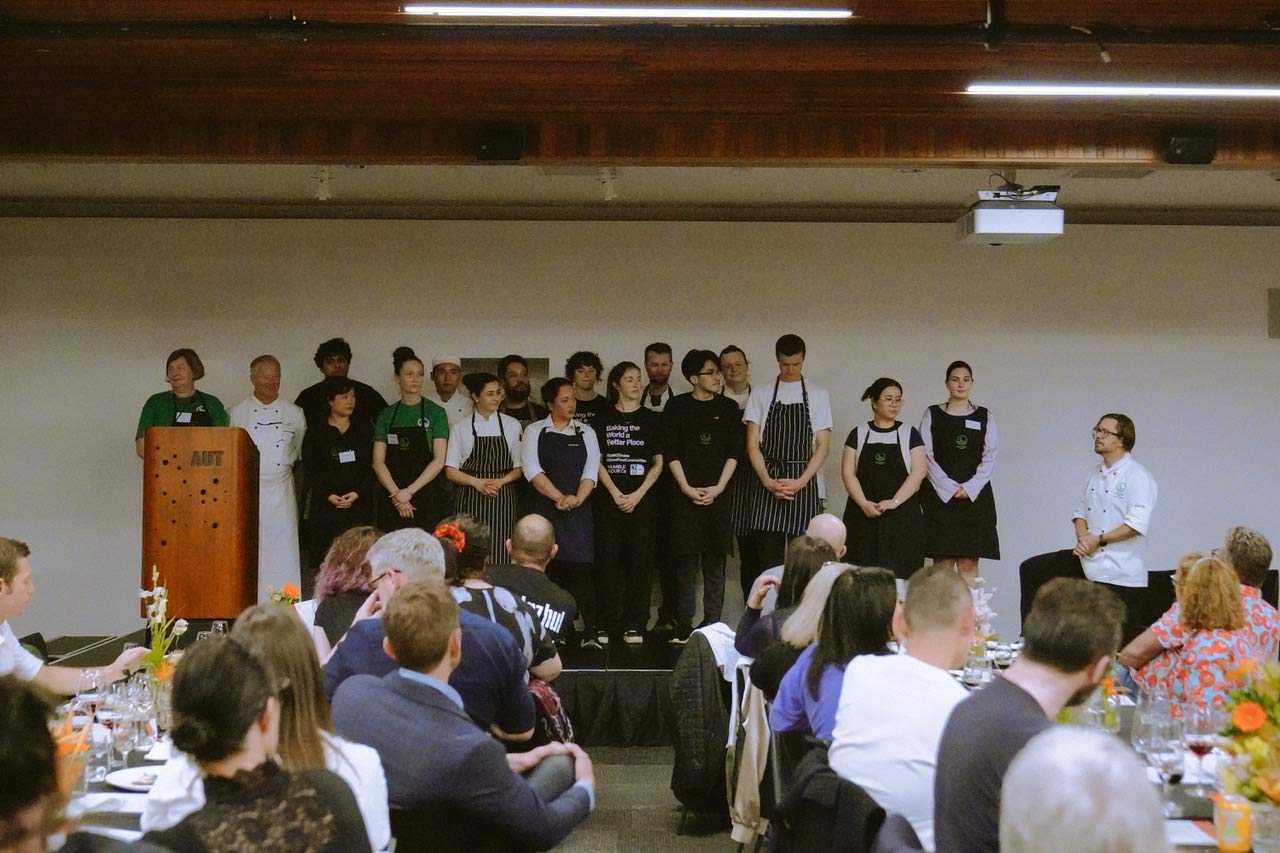 Photo:Eat NZ
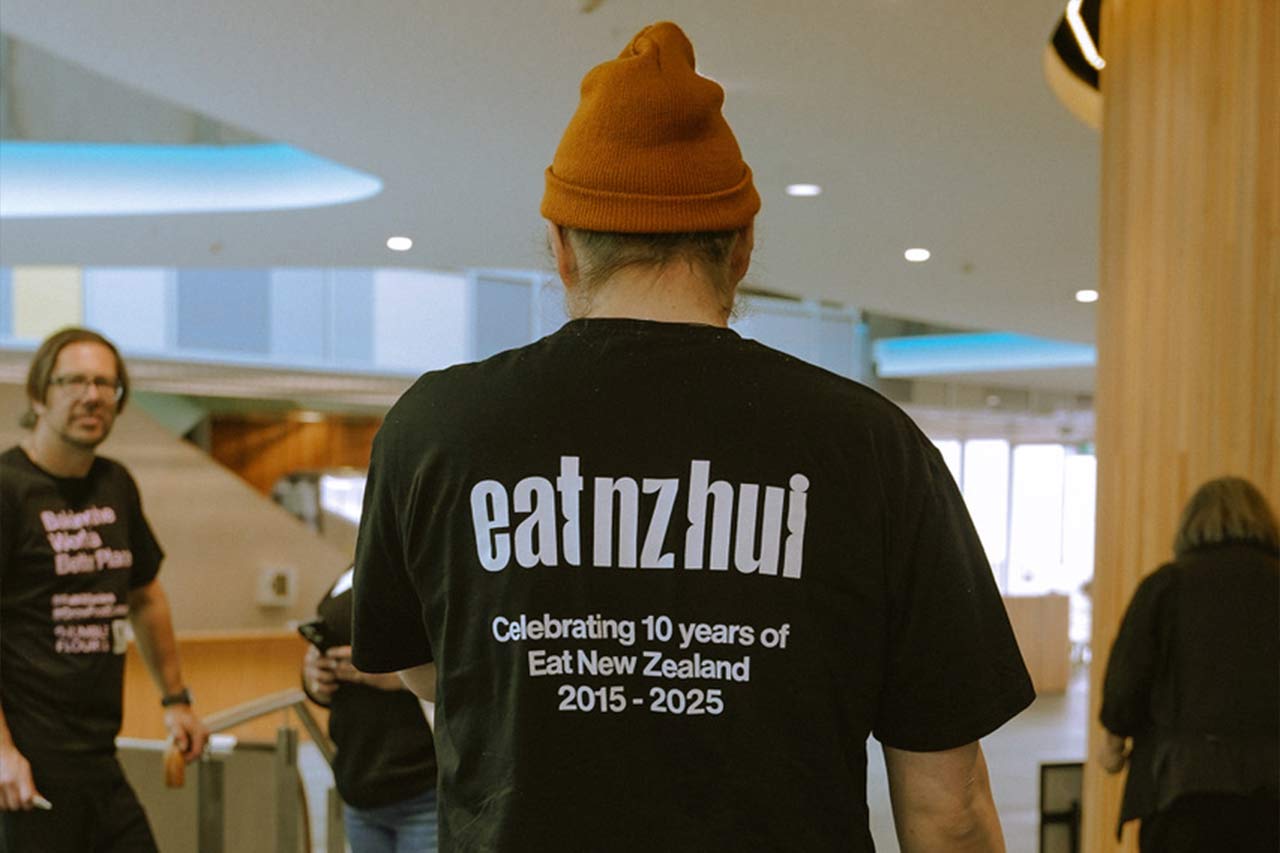 Photo:Eat NZ
Birthday celebrations
In October, Eat New Zealand celebrated its tenth birthday and AUT was excited to throw the party (in the form of a two-day hui).
As part of Te Whare Tūroa’s new collaboration with the AUT Centre for Critical Food Studies, our Research Officer Dr Tamlin Jefferson joined the celebrations to learn more about how food systems can become more regenerative.
Tamlin says “It was great being in a room with so many people who were united in their support for food sovereignty and sustainability, as well as improving outcomes for small scale growers and farmers.
“Day one felt like a very ground up, interconnected support session for community-driven work in sustainable, regenerative, circular food systems.”
Day two was more focused on the launch of the New Zealand Grain Mark. This is a new, voluntary certification that can help consumers identify and support grains grown in Aotearoa.
This idea was brought to life by the Foundation for Arable Research (FAR), in an effort to shift our reliance from imported grain to that which has been grown locally.
Tracy says “Because we don’t have the scale of other wheat-producing countries, it's costly to produce wheat in New Zealand. But if we lose that capacity entirely, it means we're reliant on imports. And that means that we're not food secure, that we don't have a resilient food system.”
Tamlin reflects that the two days were a stark contrast in terms of scale, but the whole event was a great opportunity to meet like-minded people and continue planning a more regenerative future.
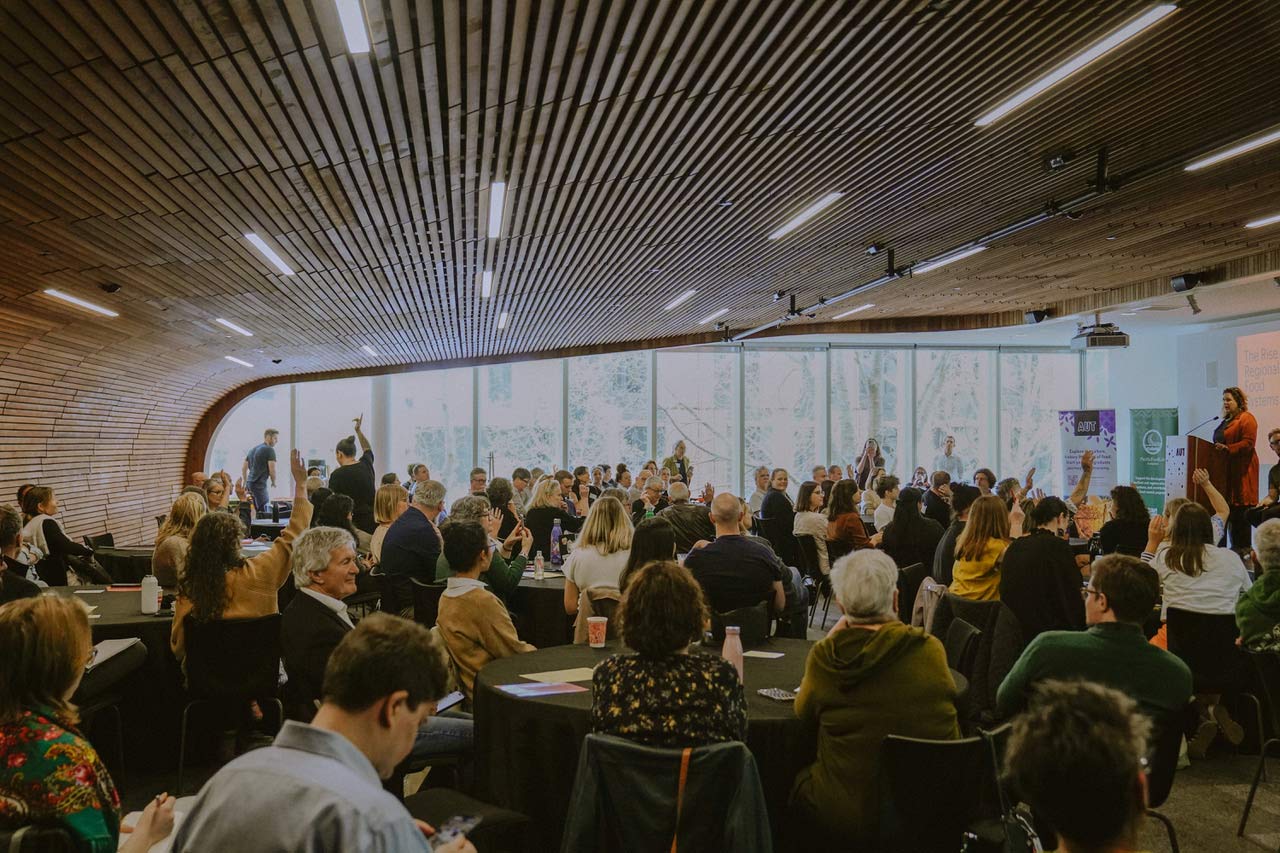 Photo:Eat NZ